The Hidden Roof Material That Triggers Massive Remediation Bills
Discover what is actually inside your roof layers, from hidden insulation to legacy materials that can trigger unexpected removal costs during home repairs.
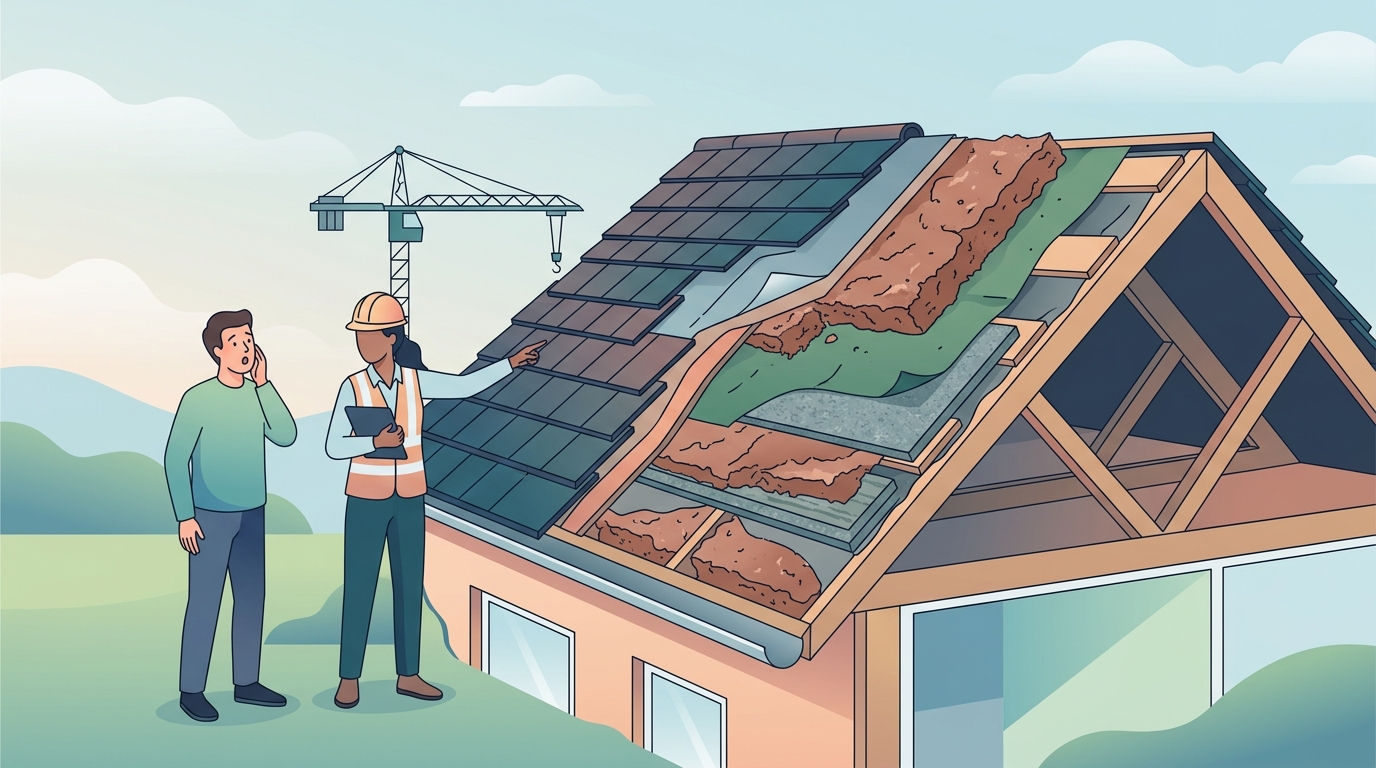
When you look at a residential building, you primarily see the outer surface of shingles, metal panels, or concrete tiles. Beneath that weather-resistant barrier lies a multi-layered assembly of underlayment, structural sheathing, rafters, and thermal insulation designed to regulate indoor moisture and temperature.
In older homes across the United States, those inner roof layers may also house legacy building materials that require special safety protocols under federal environmental regulations. Uncovering these hidden components during a routine roof repair or home restoration can quickly turn a straightforward project into a costly cleanup if proper procedures are not followed.
The Hidden Layers Beneath Your Exterior Shingles
A standard roof system relies on several functional layers working together. Directly underneath exterior shingles rests the roof underlayment, which serves as a secondary water barrier. Historically, this layer consisted of asphalt-saturated felt paper engineered to keep moisture from penetrating the wooden roof deck.
Below the underlayment is structural sheathing, usually constructed from plywood or oriented strand board (OSB). Deep inside the roof cavity, homeowners find thermal insulation, air barriers, and timber trusses or rafters supporting the ceiling structure below.
Legacy Materials and the Unexpected Cost Factor
In homes built prior to modern chemical safety regulations, roofing felts, surface sealants, and attic insulation often contained fibrous minerals added for strength and fire resistance. Federal environmental guidance identifies these legacy materials as potential hazards if they are improperly disturbed or cut during home renovations.
When roofers tear away old materials without prior inspection, airborne dust can spread throughout the attic and home interior. If testing later reveals regulated mineral fibers, specialized containment measures and hazard disposal fees apply, sharply increasing contractor expenses.
How Aging Asbestos Roofing Felt Impacts Home Value
Asphalt roofing felts and roof patch compounds produced decades ago frequently contained bound asbestos fibers. While intact roofing materials present minimal immediate risk, physical weathering, storm damage, or natural aging causes these compounds to degrade over time.
When home inspectors identify deteriorating legacy components during real estate transactions, prospective buyers often ask for full professional remediation before closing. Identifying what exists inside your roof before starting a sale or repair project helps prevent unexpected escrow delays.
| Roof Component | Typical Materials Used | Legacy Hazard Risk |
|---|---|---|
| Outer Layer | Asphalt shingles, wood shakes, clay tiles | Legacy shingles may contain bound fibers |
| Underlayment | Asphalt felt, synthetic rolls | Older felt papers frequently used fibrous fillers |
| Attic Insulation | Fiberglass, cellulose, vermiculite | Loose insulation can harbour friable particles |
| Roof Cement/Sealant | Mastic, rubberized flashing sealant | Legacy patching compounds often contained additives |
When Hidden Roofing Dust Becomes an Airborne Threat
The main health concern linked to older roofing layers involves friable materials. Material is considered friable when it can be easily crumbled or reduced to powder by hand pressure. When contractors saw through old roof decking or scrape off stuck felt, microscopic dust particles enter the air.
Inhaling microscopic airborne fibers can cause chronic respiratory issues over time, including lung tissue damage and mesothelioma. Keeping these fibers contained within non-friable, solid materials is key to managing health risks.
Identifying Disturbed Fibers and Unsafe Removal Practices
Unlicensed workers or DIY home renovators sometimes demolish old roof assemblies without checking material composition or using proper dust suppression. Grinding asphalt felts or blowing out old attic insulation spreads hazardous particles through air ducts into living areas.
- Demolishing old attic insulation without testing for legacy contaminants.
- Power-washing aged asphalt shingles containing bound fibers.
- Dry sweeping dusty roof debris during tear-off projects.
- Disposing of legacy roofing waste in regular household trash bins.
Official Inspection Steps Before Starting Any Roof Project
Before beginning major roof replacement or attic renovation on an older structure, property owners should consult certified asbestos inspectors. Professional laboratory testing determines whether materials can remain undisturbed or must be removed by specialists.
The U.S. Environmental Protection Agency advises that undamaged legacy materials generally do not pose a health risk if left intact and undisturbed. However, when replacement is necessary, trained abatement professionals must carry out proper containment and waste disposal in accordance with state and federal regulations.
Can you tell if a roof contains asbestos just by looking at it?
No, you cannot visually confirm whether roofing felt or shingles contain asbestos fibers. Accurate identification requires sending a material sample to an accredited testing laboratory.
Is intact asbestos roofing dangerous to live under?
Intact materials that are not damaged or disturbed usually do not release fibers into the air and are generally considered low risk by environmental agencies.
What should I do if my roof needs replacement?
Hire a licensed inspector to test suspicious materials before contractors begin demolition or removal work on an older home.
Sources
- Protect Your Family from Exposures to Asbestos in Building Materials — U.S. Environmental Protection Agency
- Asbestos Overview and Safety Guidance — U.S. Environmental Protection Agency
This article is for general information only and is not professional advice. Figures come from public sources and change over time; check the official source before you act.
More from True Money Net
- IRS Offer in Compromise: Qualification Rules and RCP Calculations
- Medicare Advantage vs. Medigap: Cost Breakdown and Coverage Trade-Offs for 2024–2025
- Federal Heat Pump Tax Credits: IRA Section 25C Eligibility Rules and Cost Limits
- Total Loss Auto Insurance Claims: Actual Cash Value Disputes and Rights of Appeal
- Cyber Liability Insurance Rules: Qualification Standards, Deductibles, and Policy Exclusions
- Chapter 7 vs. Chapter 13 Bankruptcy: Means Test Calculations and Exempt Property Limits