Find 5 Official Low Cost Dental Programs for Seniors Today
Discover how seniors can navigate Medicare limitations, HRSA community health centers, dental school clinics, and federal research grants to reduce dental costs.
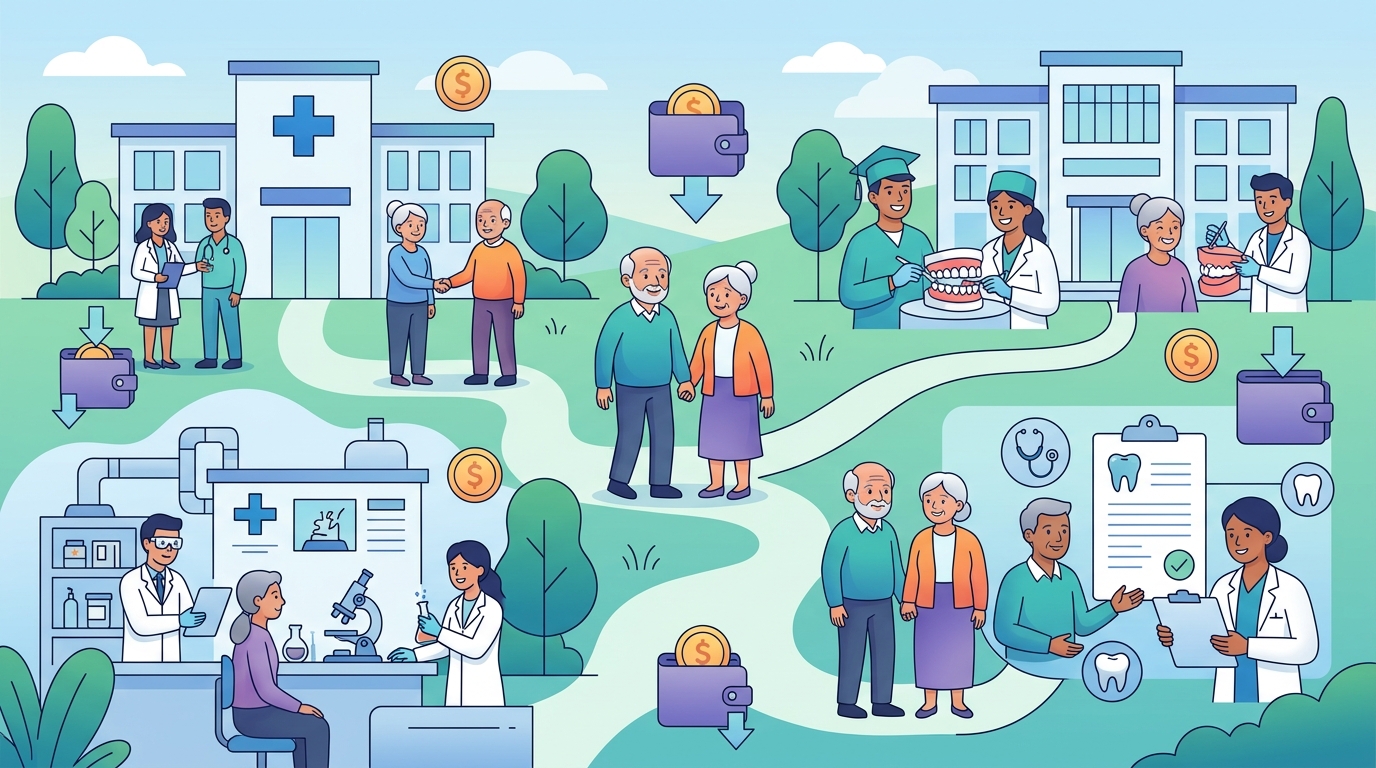
Finding affordable dental care, including complex procedures like implants, is a major financial hurdle for older adults in the United States. While many headlines advertise fully funded grants, navigating the real network of federal, state, and non-profit programs requires understanding specific eligibility rules and statutory limits.
Understanding Original Medicare Dental Coverage Limits
Many seniors assume that reaching age 65 entitles them to comprehensive dental coverage through Original Medicare. However, Medicare Part A and Part B generally do not pay for routine dental care, cleanings, fillings, dentures, or dental implants (Source 1). If you undergo routine dental procedures, Original Medicare will not cover the costs unless specific, strict medical conditions are satisfied (Source 1).
Medicare only covers dental services when they are an integral part of a primary, covered medical procedure (Source 1). For example, Medicare Part A may cover an oral exam performed in a hospital prior to a complex kidney transplant or heart valve replacement surgery (Source 1). Aside from these rare inpatient situations, routine restoration and implant work remain entirely out-of-pocket under standard Medicare rules (Source 1).
Leveraging HRSA-Funded Community Health Centers
For seniors seeking reduced-cost routine and restorative care, Federally Qualified Health Centers (FQHCs) offer a critical safety net. These health centers receive federal grant funding from the Health Resources and Services Administration (HRSA) to deliver medical and dental care to underserved populations (Source 3). HRSA-funded centers provide services regardless of a patient's financial status or insurance coverage (Source 3).
Fees at HRSA health centers are calculated on a sliding fee scale based on household income and family size relative to federal poverty guidelines (Source 3). While not all health centers have the clinical equipment or specialist staff to perform full dental implant procedures, many provide low-cost diagnostic exams, extractions, crowns, and referrals to specialized regional clinics (Source 3).
Applying to Dental School Clinics for Reduced Fees
Dental university clinics present another primary option for accessing high-quality care at lower out-of-pocket prices. Dental schools accredited by the Commission on Dental Accreditation train dental students under the direct supervision of licensed, experienced faculty (Source 2). Because these facilities function as teaching institutions, care is offered at significantly discounted rates compared to standard private practices (Source 2).
Many university programs operate post-doctoral or specialized residency clinics in prosthodontics and oral surgery (Source 2). These advanced departments regularly handle complex reconstructions, bone grafts, and dental implants at reduced costs (Source 2). Patients must complete a initial screening evaluation to determine if their oral health needs match the current educational requirements of the school's clinical curriculum (Source 2).
Accessing State, Local, and Non-Profit Assistance Programs
Beyond federal facilities and university clinics, state and local health departments frequently manage localized programs aimed at helping low-income seniors access oral healthcare (Source 2). These programs are often funded through state block grants, local tax initiatives, or charitable donations coordinated by regional non-profit organizations (Source 2).
Organizations like Donated Dental Services (DDS) connect eligible elderly or medically vulnerable individuals with volunteer networks of dentists and labs (Source 2). Applicants typically must demonstrate low income, a lack of alternative insurance options, and a permanent disability or age-related need (Source 2). Waitlists can be long depending on local volunteer participation, but accepted applicants receive comprehensive restorative treatments (Source 2).
Participating in NIDCR and NIH Clinical Trials
The National Institute of Dental and Craniofacial Research (NIDCR), a branch of the National Institutes of Health (NIH), funds clinical studies to advance oral health technology and treatment protocols (Source 2). Research studies may evaluate new implant materials, surgical techniques, or bone augmentation methods (Source 2).
When a clinical trial requires specific patient profiles, participants often receive study-related dental treatment and monitoring at no cost (Source 2). Eligibility depends entirely on meeting strict research criteria, such as specific patterns of tooth loss or overall medical health conditions (Source 2). Seniors can monitor federally registered trials to find open enrollment studies in their geographic area (Source 2).
Comparing Senior Dental Resource Options
Choosing the right avenue for dental care requires balancing cost structure, geographic availability, and specific clinical needs. Below is an overview of standard funding mechanisms available to qualifying older adults.
| Program Category | Target Population | Fee Structure | Primary Source |
|---|---|---|---|
| Original Medicare | Seniors 65+ & Disabled | Covers only rare inpatient medical-related dental | CMS (Source 1) |
| HRSA Health Centers | Underserved & Low Income | Sliding fee scale based on household income | HRSA (Source 3) |
| Dental Schools | General Public / Screening | Discounted care supervised by faculty | NIDCR (Source 2) |
| NIDCR Clinical Trials | Specific Clinical Criteria | No cost for study-related care | NIDCR (Source 2) |
Step-by-Step Guide to Applying for Assistance
Seniors looking to secure low-cost dental services should follow a structured approach to verify eligibility and minimize unnecessary administrative delays.
- Check Medicare Coverage Rules: Confirm if your dental needs are tied to an upcoming inpatient medical procedure covered under Medicare Part A or Part B (Source 1).
- Locate an FQHC: Use the HRSA online locator tool to identify nearby federally funded health centers and request information on their sliding fee scale options (Source 3).
- Contact Regional Dental Schools: Reach out to university dental clinics to request a patient intake screening appointment for discounted restorative care (Source 2).
- Search Clinical Trial Registries: Review official databases maintained by the NIDCR and NIH to identify active research studies accepting new participants (Source 2).
- Engage Charitable Networks: Contact local senior centers or state health departments to inquire about non-profit assistance programs like Donated Dental Services in your county (Source 2).
Does Original Medicare pay for standard dental implants?
No. Original Medicare does not cover routine dental care, including fillings, dentures, or dental implants (Source 1). It only covers dental exams or procedures directly required as part of an inpatient medical treatment, such as a heart valve or organ transplant surgery (Source 1).
How are fees determined at HRSA community health centers?
HRSA-funded community health centers adjust their fees using a sliding fee scale that factors in household income and family size (Source 3). This ensures that care remains accessible regardless of financial circumstances (Source 3).
Are procedures performed at dental schools safe?
Yes. Treatments at accredited dental university clinics are conducted by dental students or resident specialists under the close, direct supervision of licensed dental faculty members (Source 2).
Sources
- Dental Services Coverage — Centers for Medicare & Medicaid Services
- Finding Low-Cost Dental Care — National Institute of Dental and Craniofacial Research
- Find a Health Center — Health Resources and Services Administration
This article is for general information only and is not professional advice. Figures come from public sources and change over time; check the official source before you act.
More from True Money Net
- Save Up to 50 Percent on Dental Implants at Local Schools
- See 5 Essential Rules to Qualify for Free Implants
- Find 5 Official Low Cost Dental Programs for Seniors Today
- 5 Hidden Rules to Get Dental Implants Covered by Insurance
- SSDI Spousal Benefits: Eligibility Rules, Payment Limits, and Calculations
- FHA 203(k) Home Rehabilitation Loans: Appraisal Guidelines, Eligible Upgrades, and Fee Structures